


The Biella Province countryside has an unusual medieval fortress of a sort called Ricetto di Candelo. Its story is unusual because it wasn’t built by nobles or military architects, but by the people of Candelo themselves as a fortified communal warehouse to protect their valuables during unstable times. The ricetto functioned like a medieval cooperative storage district.
The complex is enclosed by thick stone walls with limited access points, typical of defensive structures. Inside, the ricetto is made up of narrow cobbled lanes and rows of small stone buildings called cellars or cantine, each belonging to a local family. These structures were used for storage, winemaking, and preservation, not for living.
We reached Candelo in the afternoon, when the Biellese light turns that soft, smokey‑colored shade that makes stone look warmer than it really is. The town itself is quiet, almost self‑contained, and then — just past a curve in the road — the Ricetto appears.
It doesn’t rise like a castle. It doesn’t announce itself. It sits low and compact, a perfect medieval grid wrapped in stone walls, as if the centuries have been holding their breath around it.
We stepped through the gate and the sound changed immediately. The modern world stayed outside; inside, the lanes are narrow, cobbled, and faintly echoing. Every building is the same height, the same rough stone, the same wooden lintels — a kind of architectural democracy born from necessity. You can feel the logic of it: this was never a place to live, but a place to protect what mattered.
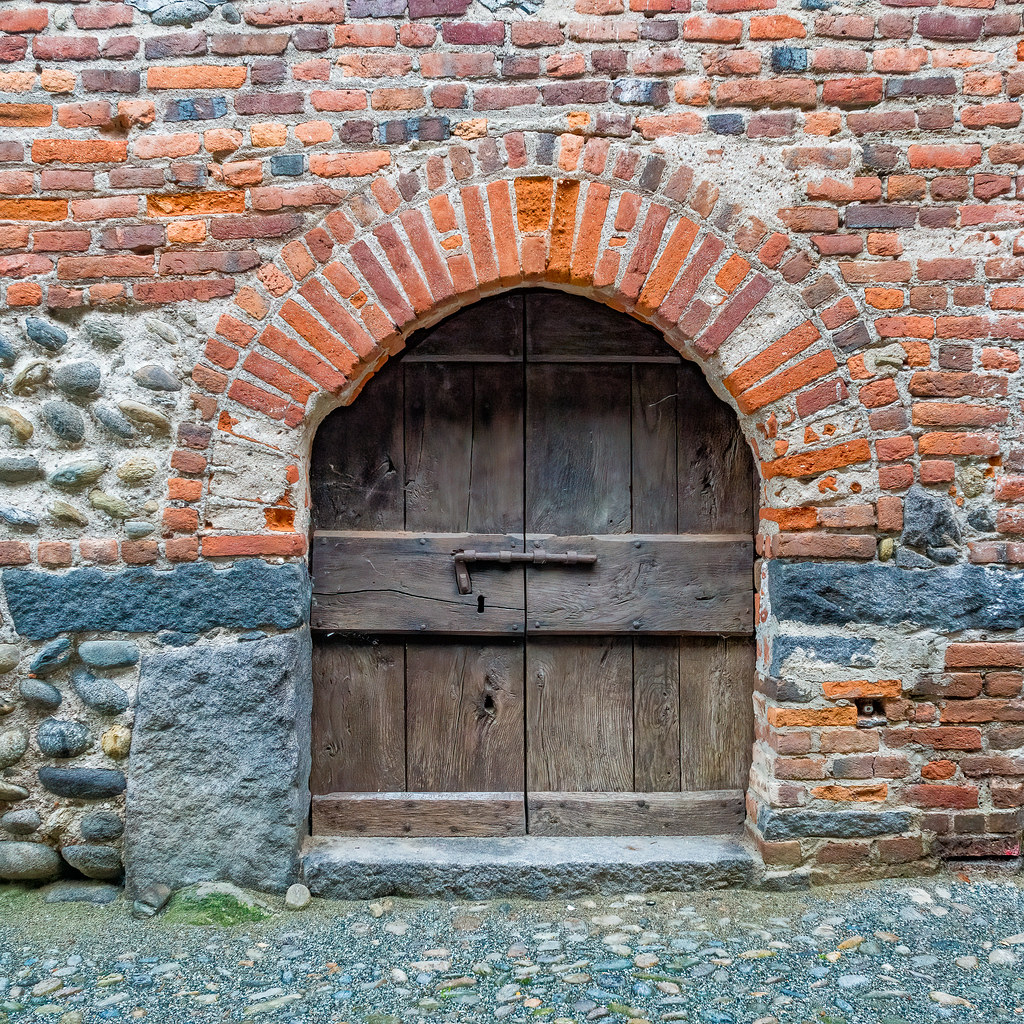
We wandered slowly. Each cellar — the little storage houses — has its own personality. Some still smell faintly of old wine barrels. Others hold tools, or nothing at all, just cool air and dust motes drifting in the slanted light. You imagine the medieval families who once kept their harvests here, each unit a lifeline: grain, wine, seeds, tools, the things that meant survival. The ricetto was their vault, their refuge, their collective insurance policy against the unpredictability of the world.