

Tilework found along the Silk Road reflects different eras of Central Asian history. Some examples are modern interpretations of traditional designs, while others preserve artistic traditions that have evolved over centuries.
The tilework of Central Asia tells its own story. Under the Timurids, artists transformed tilework into a defining visual language, exemplified by monuments such as Gur-e Amir and later displayed on a monumental scale at Registan. At Shah-i-Zinda, that artistic tradition reached some of its most refined expression. In Khiva, palace and madrasa architects developed their own distinctive style, combining vibrant blue-green tilework with carved wood and painted decoration. In Bukhara, ornamentation generally played a more restrained role, supporting religious architecture rather than dominating it. Today, buildings such as the Islamic Civilization Center demonstrate how these centuries-old artistic traditions continue to inspire a new generation of architects and craftsmen.

At Gur-e Amir in Samarkand, decorative tilework became more than ornament. Geometry, color, and craftsmanship combined to create a visual style that would influence Central Asian architecture for centuries.

The madrasas of Samarkand's Registan Square transformed architectural decoration into a public statement. Their immense façades proclaimed both artistic achievement and intellectual ambition. It was a center of wealth, scholarship, and power. Much of the tilework visible today reflects extensive restoration efforts intended to preserve or recreate the appearance of the original structures.

At Shah-i-Zinda in Samarkand, tilework reached extraordinary levels of refinement. No two monuments appear exactly alike, and every surface reveals new details upon closer examination.

In Khiva, tilework evolved in its own direction. The palaces and madrasas of the city favor bold geometric patterns and vibrant blue-green colors that complement the desert environment. At Toshhovli Palace, decorative tiles, carved wood, and painted ceilings combine to create some of the most distinctive interior spaces in Central Asia.

In Bukhara, tilework is generally more restrained than in Samarkand. At Po-i-Kalyan, the emphasis is placed on the architectural ensemble as a whole, creating a balance between religious function and decoration.

In Tashkent, the Islamic Civilization Center draws inspiration from the artistic traditions of the Silk Road, demonstrating how historic designs continue to influence modern architecture.
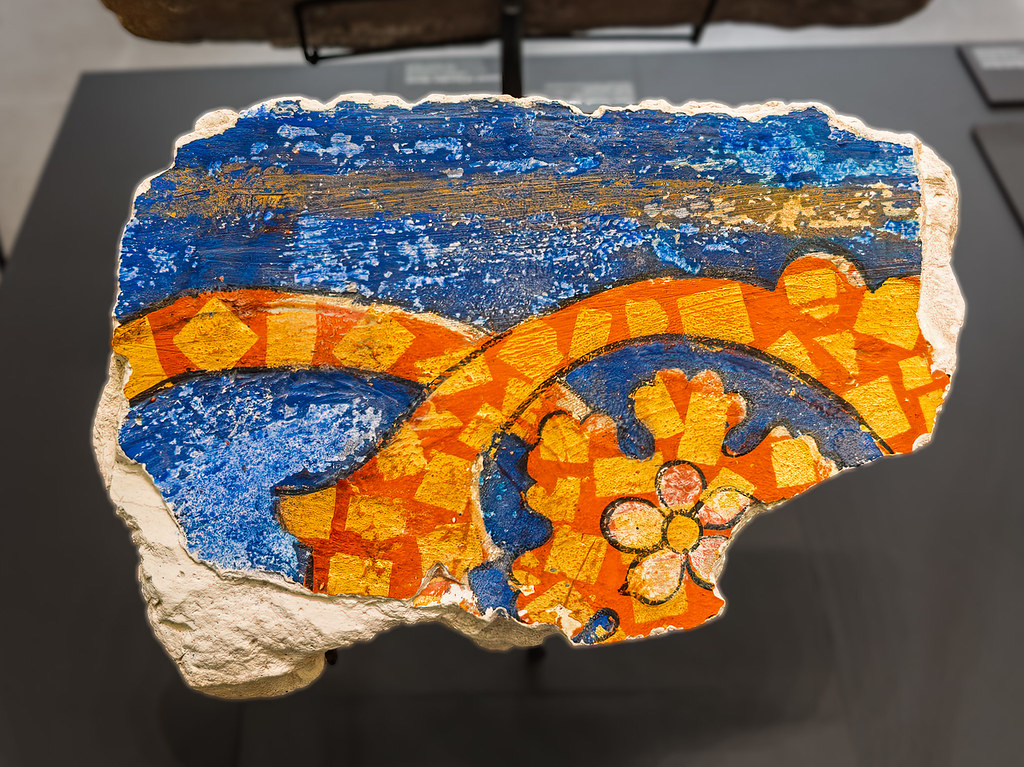
Fragments
Here are some tilework pieces from Samarkand's Registan Museum