

Our journey through Portugal and Spain unfolded like a tapestry of vistas, warm plazas, and unforgettable encounters.
From Lisbon’s energy to Évora’s Roman columns and talha‑aged wines, each stop revealed a new layer of history. We wandered through Mérida’s grand theater, strolled Carmona’s white streets, and explored Seville’s sweeping plazas and soaring cathedral.
Lisbon
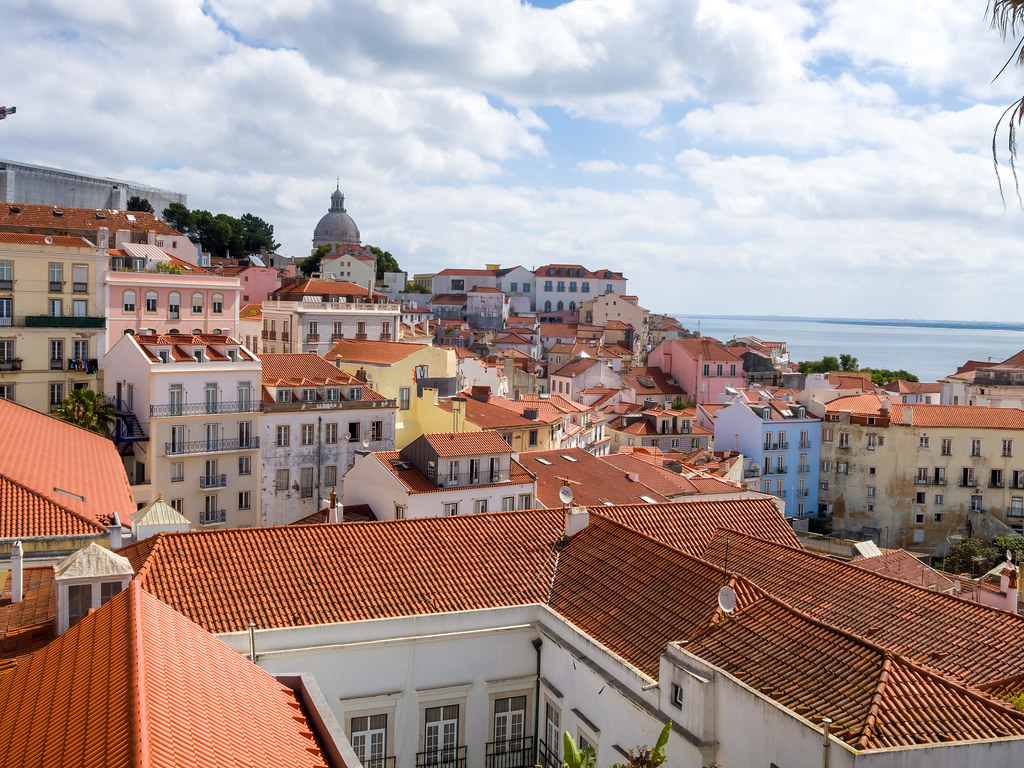
Our journey through Portugal and Spain began in Lisbon, where the city spilled down its hillsides toward the river.

We wandered through Baixa, passing the iron lacework of the Santa Justa elevator and the Arco da Rua Augusta glowing in the distance, before climbing into the narrow lanes of Alfama — tiled façades, laundry lines, and the soft promise of fado drifting somewhere ahead.
Sintra

Our day trip took us to the National Palace at Sintra. From the palace terrace, Sintra unfolds like a dream — manicured hedges below, misty hills beyond. It’s a royal view framed by nature’s green embrace. Sintra’s rooftops tumble in color — pinks, yellows, blues — a painter’s palette scattered across the hillside. Every tile whispers centuries of charm. Inside the National Palace, the Heraldic Hall dazzles with Moorish-inspired tiles — intricate patterns that tell Portugal’s story in color and clay. In the palace kitchen, baskets of fruit and hanging garlic recreate royal life centuries ago — simple, earthy, and beautifully timeless.
Évora
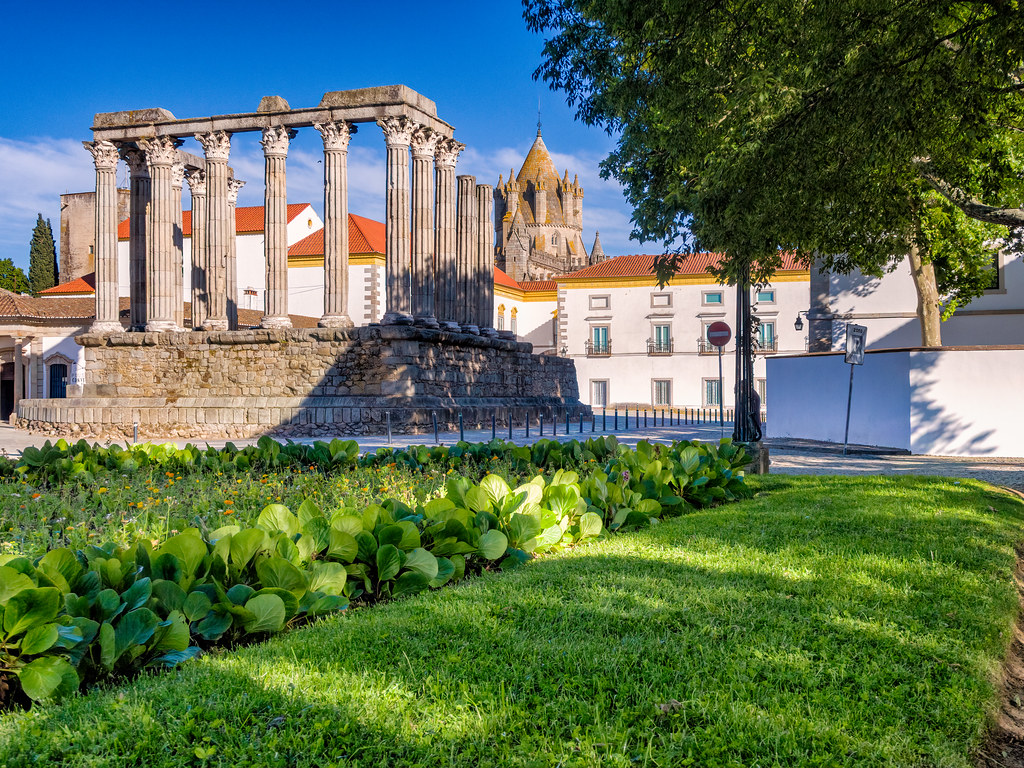

From Lisbon, the road carried us east to Évora, a city where Roman columns rise beside whitewashed houses. We tasted talha‑aged wines in ancient cellars and walked quiet streets that seemed unchanged for centuries. Leaving Portugal behind, we crossed into Spain and paused in Mérida, where the Roman theater still stands ready for an audience, its marble columns echoing voices from two thousand years ago.
Carmona


Andalusia opened before us in rolling olive groves and distant hilltop towns. Carmona welcomed us with sunlit plazas and timeless stone walls. In Seville, we stood beneath the soaring vaults of the cathedral, wandered the gardens of the Alcázar, and watched the city glow gold in the late‑day heat.
Ronda


The road to Ronda brought surprises — the surreal basilica at El Palmar de Troya, a sweet café bombón at a roadside stop, and a visit to a bull ranch where tradition and controversy live side by side. Ronda itself rose dramatically on its cliffs, the Puente Nuevo stretching across the gorge like a bridge between worlds.
Úbeda


Córdoba offered a quieter beauty. In the Mezquita, a forest of red‑and‑white arches shimmered in the half‑light, while outside, the courtyards held the last blooms of the Patio Festival. In the Judería, we stepped into the tiny medieval synagogue — a chamber of carved stucco and Hebrew script, a rare whisper of Spain’s Jewish past.

Farther east, Úbeda revealed its Renaissance grace: the Church of El Salvador glowing at twilight, the elegant rooms of the Palacio Vela de los Cobos, the hidden chambers of the Synagogue of Water, and Paco Tito shaping clay into art in his workshop. Among the olive groves, we visited Oleícola San Francisco, tasting fresh oil with local tapas and wine — simple, pure, unforgettable.
Toledo


Crossing La Mancha, we entered the land of Don Quixote and Sancho Panza, where windmills and wide plains still carry the spirit of Cervantes’ wandering knight. A brief stop at Casa Pepe — equal parts rest stop, jamón counter, and political curiosity — reminded us that history in Spain is never far from debate.

And then came Toledo. From across the Tagus River, the city rose like a golden crown above the river. Inside, El Greco’s paintings glowed with mystical light, Toledo blades gleamed in shop windows, and artisans etched gold and silver into Damasquino jewelry. We walked the riverbanks, explored the El Greco Museum, traced early Spanish history in the Visigoth Museum, and finally stood beneath the soaring vaults of the cathedral — a masterpiece gathering centuries of devotion into one breathtaking space.
In every city, we found beauty not just in monuments, but in the quiet moments between them: a shared drink, a sudden view, a story told by a guide, or the way evening light touched old stone. Our travels became a mosaic of landscapes, cultures, and human craft — a journey stitched together by curiosity, wonder, and the joy of discovering places that stay with you long after you’ve left.