

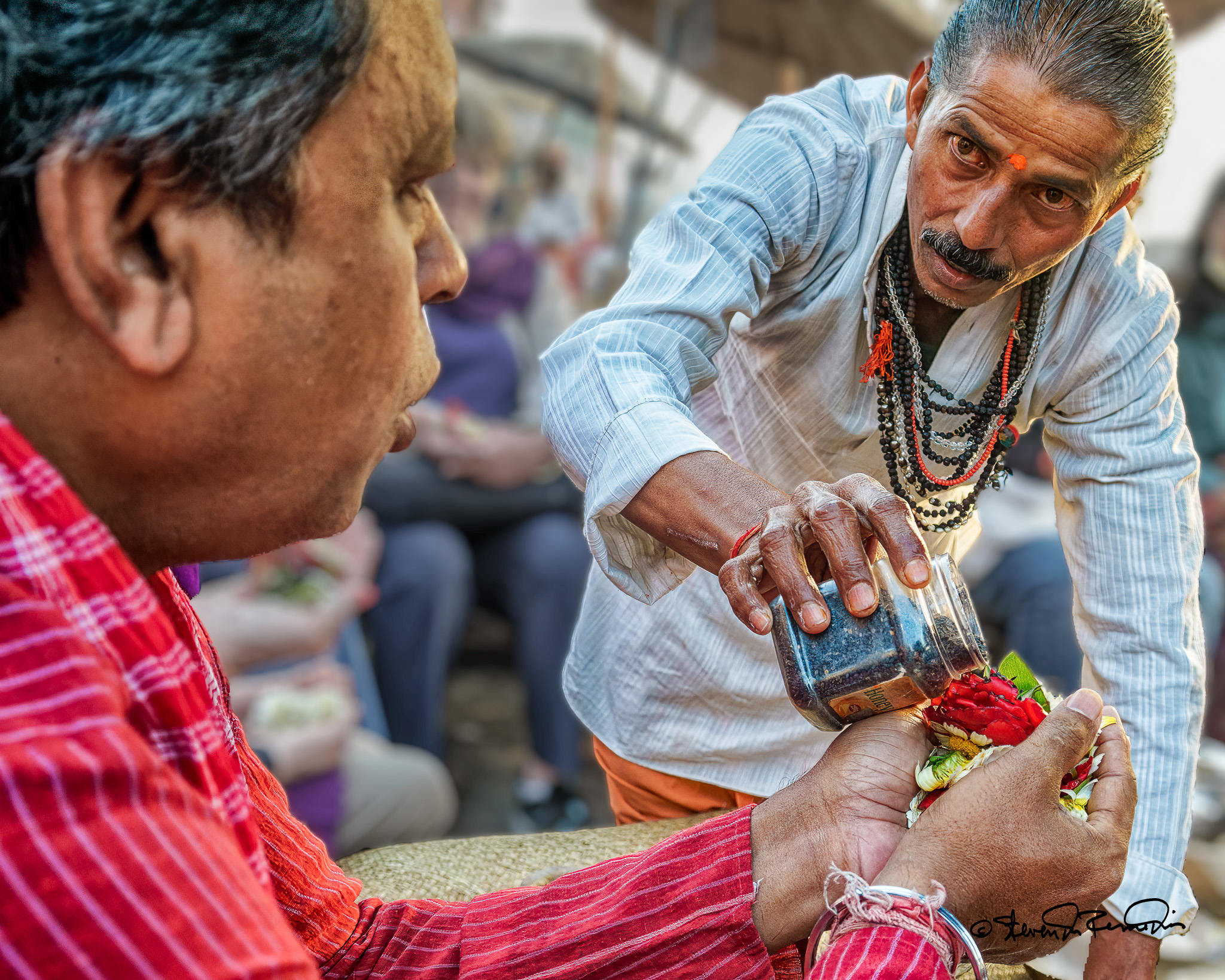
At the edge of the Ganges in Varanasi, two devotees enact a quiet ritual.
The man dressed in white, adorned with layered beads and a crimson tilak pressed to the center of his forehead, pours sacred ash into the open palm of another. The recipient, clad in red and holding a cluster of flowers, receives the offering with reverence.
The tilak — a red mark made of vermilion — signifies spiritual awakening and the third eye, a point of divine insight. Around them, the ghat hums with life: chants, footsteps, river breeze. But in this exchange, time slows — a moment of transmission, devotion, and ancestral rhythm.