

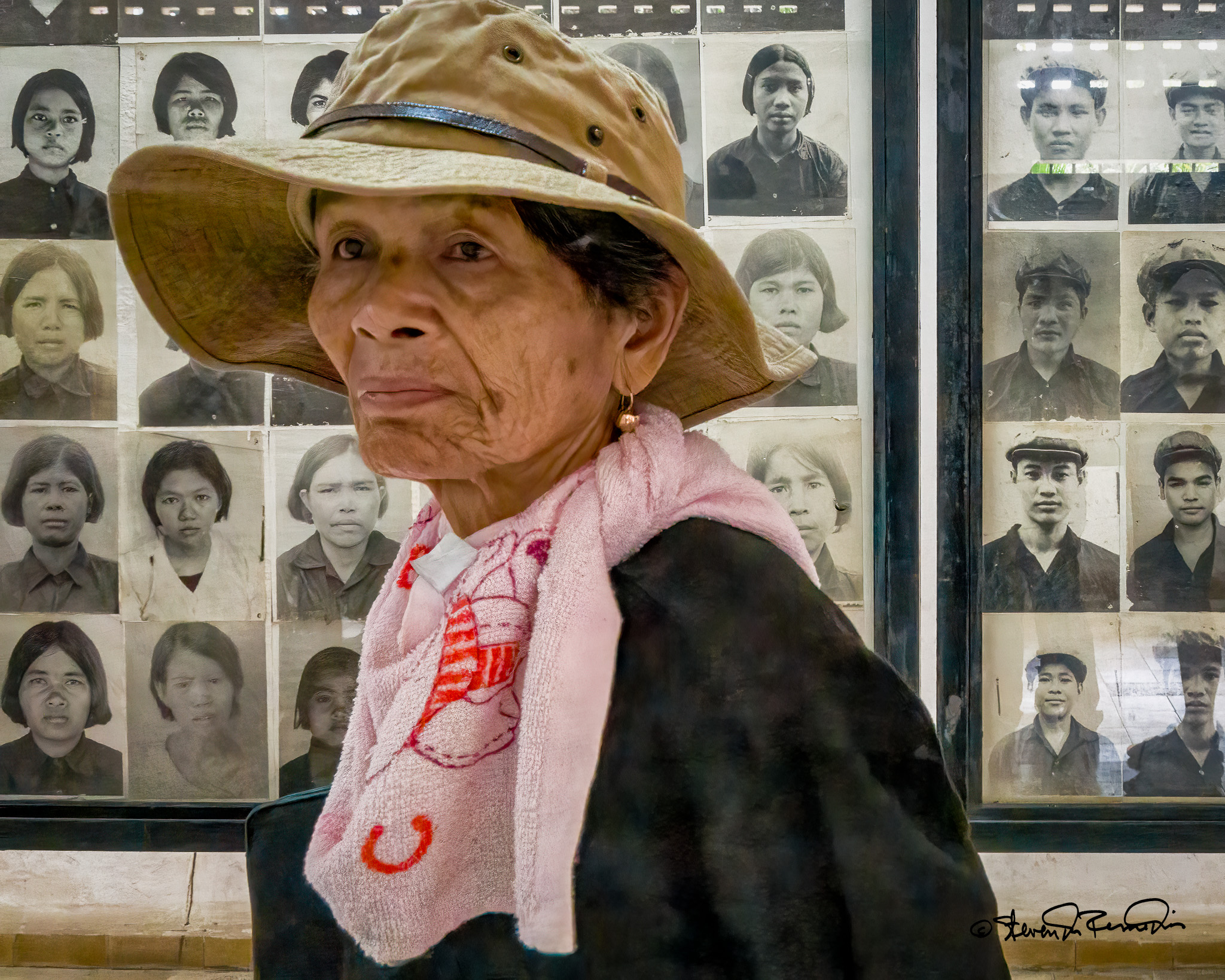
At Phnom Penh’s S-21 prison — now a memorial site — a woman gazes at the wall of black-and-white portraits, each face a record of lives extinguished during the Khmer Rouge regime.
Her wide-brimmed hat casts a soft shadow as she stands before a grid of victims, her posture still, her expression heavy with remembrance. The pink towel and the museum’s faded walls offer a quiet contrast to the stark finality of the photographs.
In this moment, history is not distant — it presses close, intimate and unresolved, etched into the silence between her and the faces that remain.